Get the answers you need while you work. AI Chat helps you find details in a case or look up clinical insights without leaving your workspace or searching through piles of paper.
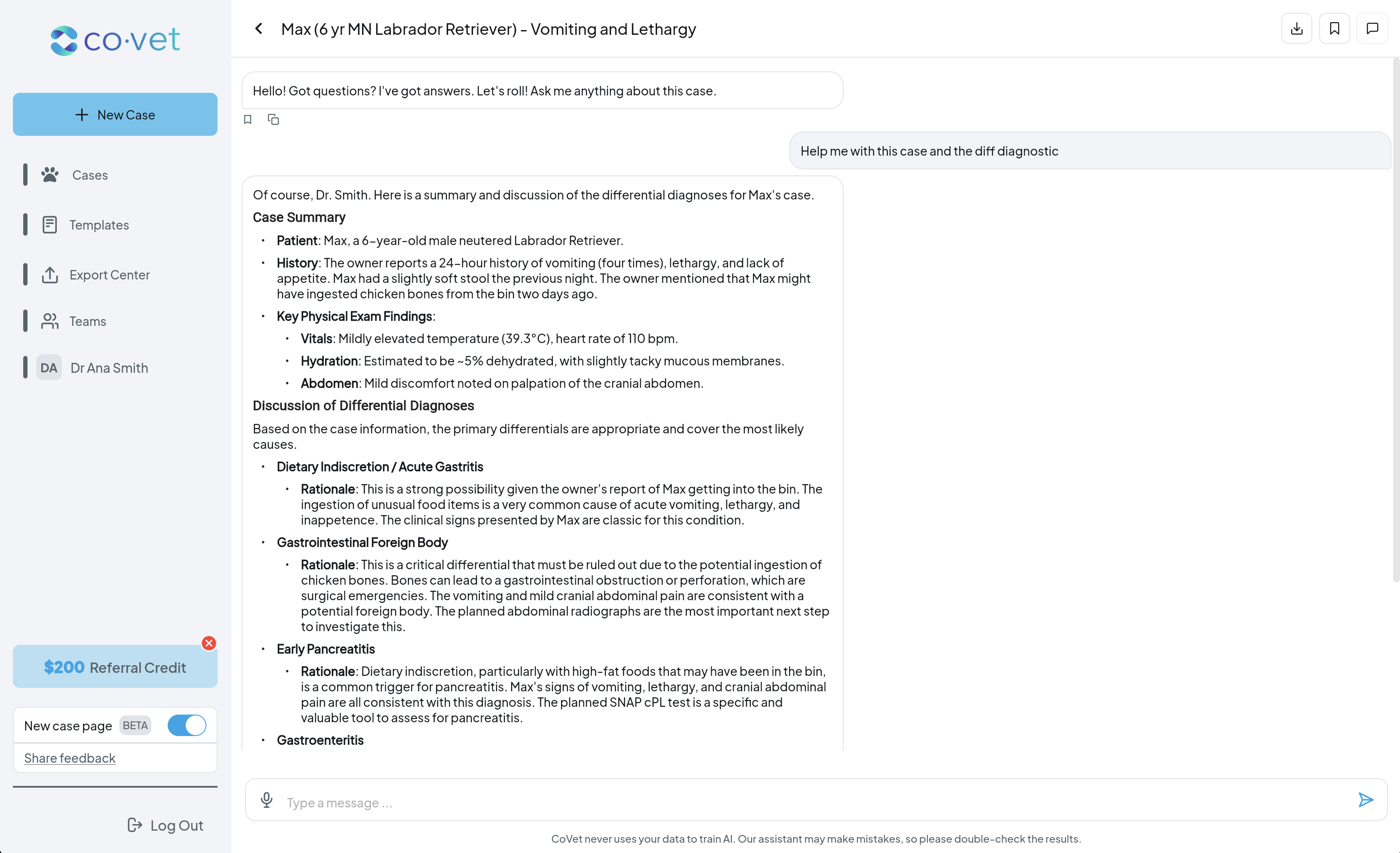
What Can You Ask?
Think of the AI Chat as a detail-oriented colleague who has read every page of the file for you. It helps you with two things:
- Questions about your case. Get answers based on medical histories, lab reports, and recording transcripts for the patient you're seeing right now.
- Clinical questions. Pull from trusted, web-accessible clinical sources for general protocols and guidelines.
How It Works
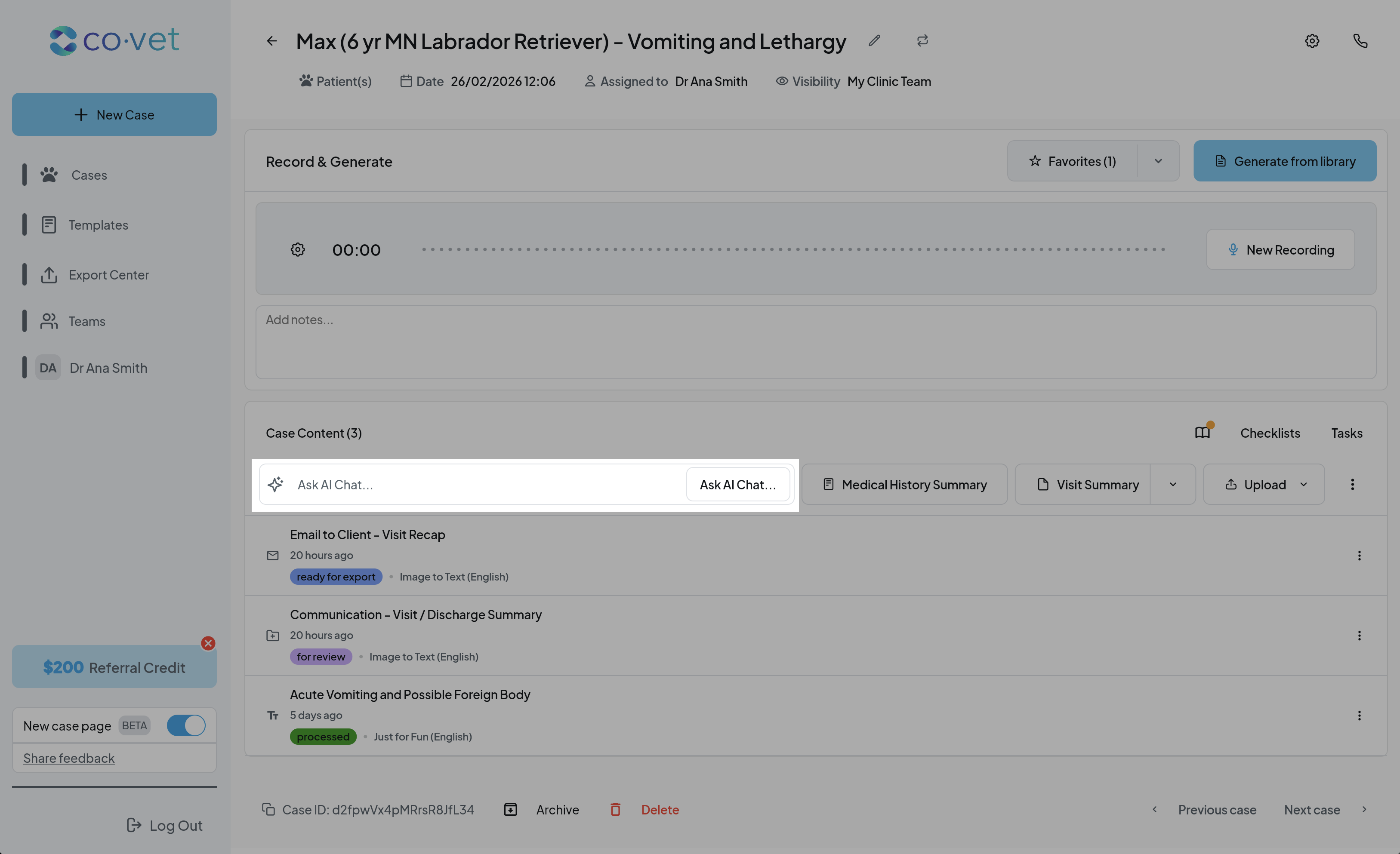
Step 1: Open AI Chat From Your Case
Click on the chat icon within your current case. You can start typing your question naturally, just like you’re talking to a teammate.
Step 2: Chat Reviews the Case
The system automatically reviews everything attached to the case, including:
- Uploaded medical histories and lab reports
- Transcripts from your appointments
- Your own case notes
Step 3: Review Sources
When CoVet AI Chat answers your question, it provides links to the original sources and a summary of the source quality.
Review the references to verify the details.
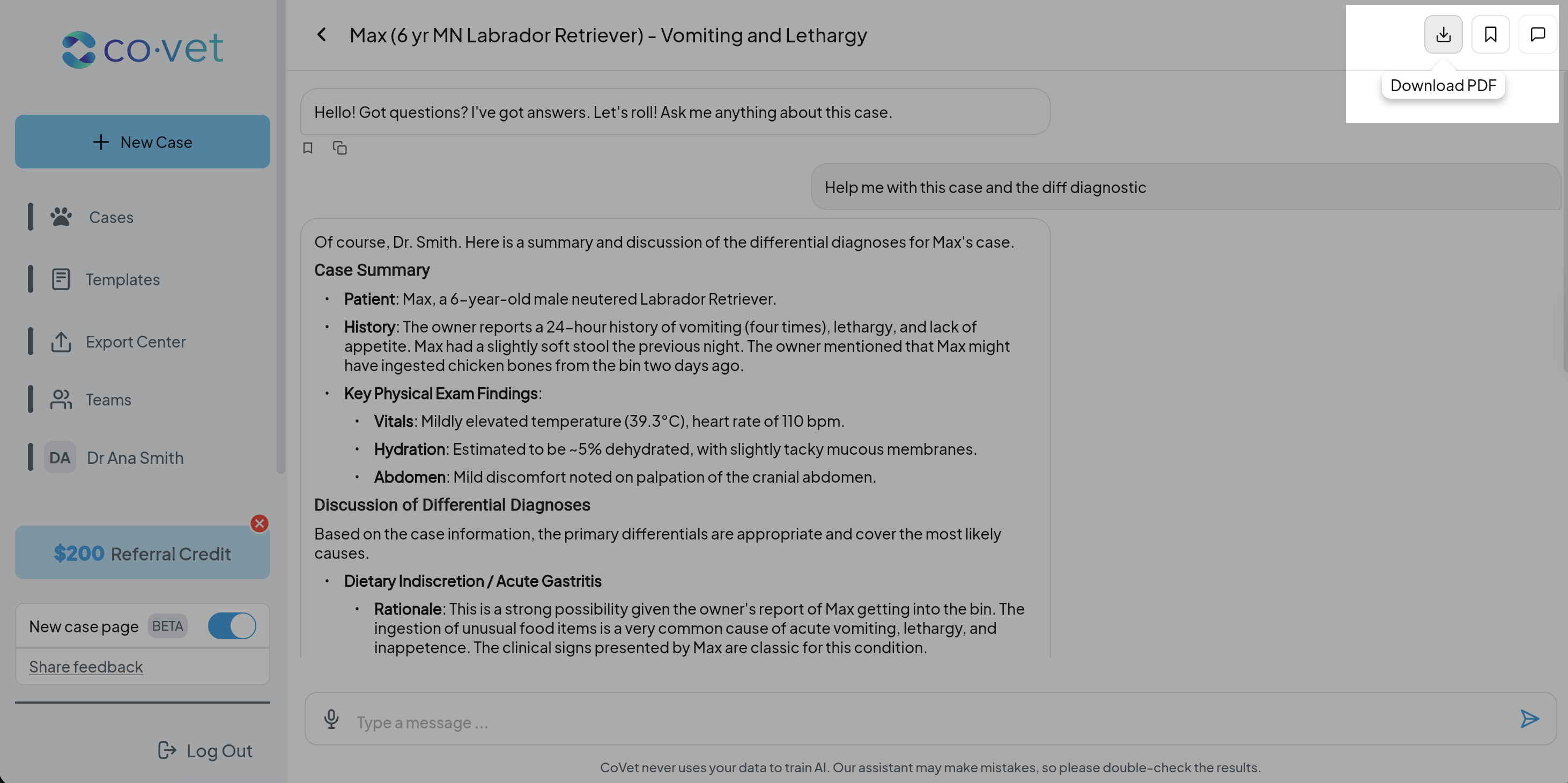
Step 4: Export and share
When a chat includes a breakthrough or a specific protocol you want to keep, you can export the conversation as a PDF.
Once exported, you can attach what you discussed to the medical record or share it with your team.
Examples of What You Can Ask
About your patients:
- “Can you summarize the uploaded history in 3 bullet points?”
- “What abnormal lab values are noted in the PDF?”
- “When did the vomiting first start according to the record?”
About clinical protocols:
- “What are current recommendations for managing feline hyperthyroidism?”
- “What are the top differentials for acute onset ataxia in dogs?”
- “What are common side effects of enrofloxacin?”
Tips for Best Results
- Be specific in your questions. If you want to know about a certain document, make sure to mention it (e.g. "the uploaded referral letter").
- Speak naturally. There is no need for special codes or formatting. Just ask your question the same way you'd ask another vet.
Was this article helpful?
That’s Great!
Thank you for your feedback
Sorry! We couldn't be helpful
Thank you for your feedback
Feedback sent
We appreciate your effort and will try to fix the article